Friday, 4:15 PM, March 2025. My phone lit up with a number I didn't recognize. Nine years in fabric supply has taught me that pattern: unfamiliar numbers on Friday afternoons are almost never good news.
The caller was a commercial interior designer I'd met about two months earlier, at our Raymond store on the fabric wall. She'd come in to run her hands over the grass cloth upholstery fabric samples—the way designers do, feeling for texture no photo can capture. She was also comparing swatches for the hotel staff uniforms, since Raymond clothing fabric is a line we supply to hospitality clients. But this emergency wasn't about uniforms.
"I need help," she said. "They delivered the wrong grass cloth upholstery fabric. Fifty-two yards. It's printed to look like grass cloth, but up close it's a fake. I can't install this."
Her furniture installation was Monday at 9 AM. Her supplier's next roll was "about three weeks out." That left 64 hours, most of them on a weekend.
I handle calls like this. In my role coordinating rush fabric orders for furniture makers, hospitality buyers, and the occasional apparel brand, I've triaged a serious number of deadlines. Last quarter alone we processed 40-some rush orders—maybe 45, I'd have to check the spreadsheet—with a 95% on-time rate. The ones that slipped? All avoidable. (Should mention: that 95% counts the orders where we paid extra for backup couriers. Nobody sees that in the invoice breakdown.)
The Grass Cloth Problem
First thing I asked was the color. She needed a pale celadon-ivory finish, that soft natural look real grass cloth is famous for. True grass cloth upholstery fabric is woven from natural fibers like jute or sisal, and the weave is deliberately irregular. That's the whole appeal. You can't fake it with a print. Her previous supplier had shipped a smooth polyester substitute with a printed texture—looked okay at six feet, terrible at arm's length.
We carried the real thing. Eight rolls, same dye lot, matching her approved swatch at a Delta E under 2. That's the color tolerance standard we use, referenced against Pantone guides. Tight enough that trained observers can't see a difference. I checked those numbers before I promised anything. Then I quoted her a price, a timeline, and a promise I could actually keep: the grass cloth ships Saturday morning and arrives Sunday by noon.
Once I knew the dye lot matched, the rest of the decision was a no-brainer. The grass cloth was already fire-retardant treated, which skipped a step. (Should mention: not every stock roll in our warehouse comes pre-treated. FR compliance is something we confirm before quoting, not after.)
The Cotton Knit Request and the Polyester Question
Then she asked something I didn't fully expect.
"Separately—I need 40 yards of 100 cotton knit fabric for the chair base layers. And... is polyester warmer than cotton? The hotel owner wants the window seating area to feel cozy even in winter."
I get this question a lot. Here's the honest answer.
Polyester is the warmer fiber in most practical conditions. The mechanism is simple: polyester filaments trap still air in tiny pockets, and air is a poor heat conductor. That's why fleece jackets and outdoor gear are overwhelmingly polyester. Cotton, by contrast, absorbs moisture and holds it against your skin. If you're active in cotton in cold weather, you get damp, and damp cotton accelerates heat loss. That's the old "cotton kills" saying in outdoor circles.
But for this project—upholstered lounge seating in a climate-controlled hotel—the warmth difference was basically irrelevant. The room would sit at 68 degrees in winter. Nobody would freeze. What mattered was breathability and hand feel. And 100% cotton knit fabric is hard to beat there. It breathes, drapes naturally, and won't pill the way a polyester blend will after a few seasons of actual use.
Had this been outdoor patio furniture or a drafty mountain cabin, I'd have steered her toward a polyester performance fabric and felt good about it. Polyester genuinely wins when insulation and moisture resistance matter. For a hotel lounge in a temperate zone? Cotton knit, no question.
Here's where things got interesting. The numbers said: recommend the polyester. It's warmer, it's easier to clean, and the performance line carries a better margin. My gut said she wasn't asking about a lab test—she was asking about how the chair feels on a Tuesday afternoon. I went with my gut. The right recommendation sometimes costs us margin. That's part of the job.
Interestingly, the same question shows up on the Raymond clothing side of our business. Designers sourcing staff uniforms ask whether cotton or polyester shirts make more sense. Same principle: cotton for indoor, climate-controlled environments; polyester or performance blends for outdoor, high-activity, or moisture-heavy settings. The answer is never just a number on a warmth chart.
The 8:15 PM Text
Back to the rush. The order sheet read: 100 cotton knit fabric, 40 yards, undyed, fire-retardant treated. That last line was the problem.
At 8:15 that night, the designer texted:
"Hotel owner just asked if everything meets fire-retardant requirements. Are we good?"
The grass cloth? Treated and certified, no issue. The cotton knit? Not treated. Untreated cotton in commercial upholstery fails the cigarette ignition test—NFPA 260, the standard most US jurisdictions use for upholstered furniture. Plain and simple. Missing FR certification is a deal-breaker for hospitality work.
I had two options:
- Ship the cotton knit as-is and hope the inspector didn't check.
- Delay it 24 hours for FR treatment and pay for a second courier run on Sunday.
The numbers said: ship as-is. Weekend install, inspections rarely happen on opening day, and the cotton knit is an internal base layer—not the visible surface. Odds of getting flagged were low.
My gut said: the owner asked. That means someone's been burned before. If it fails, it's not a quick swap. It's stripping the chairs, reupholstering, and delaying an opening that carries a $25,000 penalty clause, per what the designer told me later.
We split the shipment. Grass cloth went out Saturday morning as promised. The cotton knit went through FR treatment and left Sunday on a separate courier. Extra cost: $240 for the treatment, $180 for the second run. The designer paid the treatment; we covered part of the courier overage. Fair split.
I should add that this is why I always ask where a fabric is going, not just what color it needs to be. If I'd asked that on the first call, the FR treatment would've been in the original quote, and there'd have been no 8 PM scramble on a Friday.
Sunday Morning
Both couriers delivered. Sunday at 11:40 AM, to be exact—I watched the driver scan the barcode and sent the designer a two-word text: "It's there." An hour later she sent a photo from the hotel lobby. Grass cloth headboard panels leaned against the wall, catching the warm sconce light the way celadon-ivory does. Cotton knit base layers sat stacked on the chair frames, undyed and ready to wrap.
The inspection passed Monday morning. The install finished Tuesday. The designer has sent me three more RFQs since.
I have mixed feelings about rush order premiums. On one hand, they feel steep—$240 for a chemical treatment that takes 20 minutes is hard to justify at first glance. On the other, I watched our warehouse team work a Saturday morning, re-verifying dye lots, re-cutting rolls, coordinating two separate couriers. That effort is real. The premium isn't gouging. It's what reliability costs.
What I'd Tell Anyone Facing the Same Questions
Grass cloth upholstery fabric: run your hand over it before you buy. Real grass cloth has an irregular, tactile slub. If the surface feels too smooth or the pattern looks repeated, it's a printed imitation. That won't show up in a product photo.
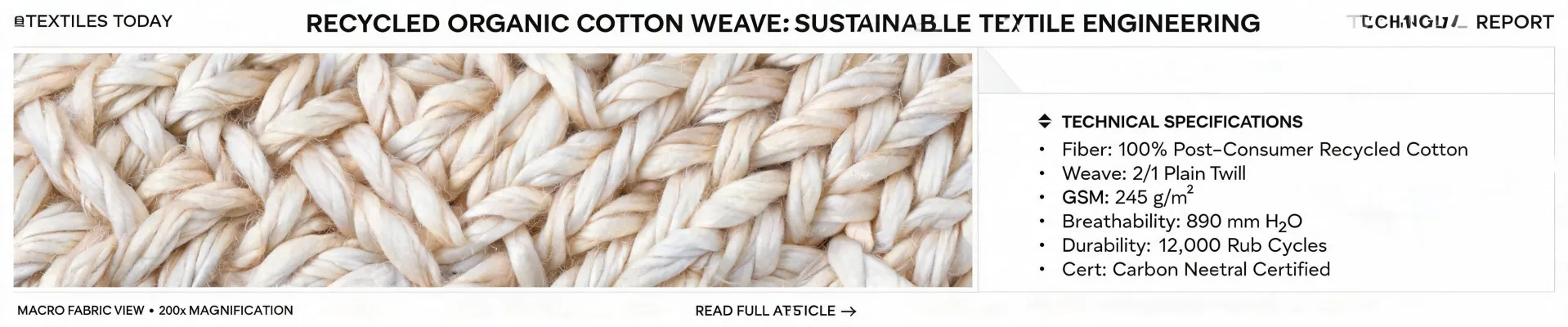
100% cotton knit fabric: excellent for upholstery base layers, drapery, and interior applications where breathability and natural hand feel matter. For commercial use, confirm fire-retardant treatment before you promise it to a client.
Is polyester warmer than cotton? In most practical conditions, yes. Polyester traps heat and shrugs off moisture, which makes it the right choice for outdoor or active contexts. But in climate-controlled interiors, cotton's breathability wins. The answer depends on the environment and the application, not a fiber's "warmth score."
One more number for context. That designer saved $300 by going with the lower-priced supplier. The re-order, with FR treatment and the second courier, cost her about $900 more than doing it right the first time. The lower-priced option was the expensive one in the end.
The broader lesson: when the deadline is tight, don't skip the boring 30-minute diligence. Check the dye lot. Confirm the treatment. Ask where the fabric is going. The 48-hour rescue works because of the checks that happen before the drama starts.
If you're reading this because you're in a similar panic—wrong fabric delivered, or trying to decide between cotton and polyester—start with the application, not the fiber. And if it's a rush, find someone who tells you honestly what can't be done in time. That honesty is cheaper than any rush fee.