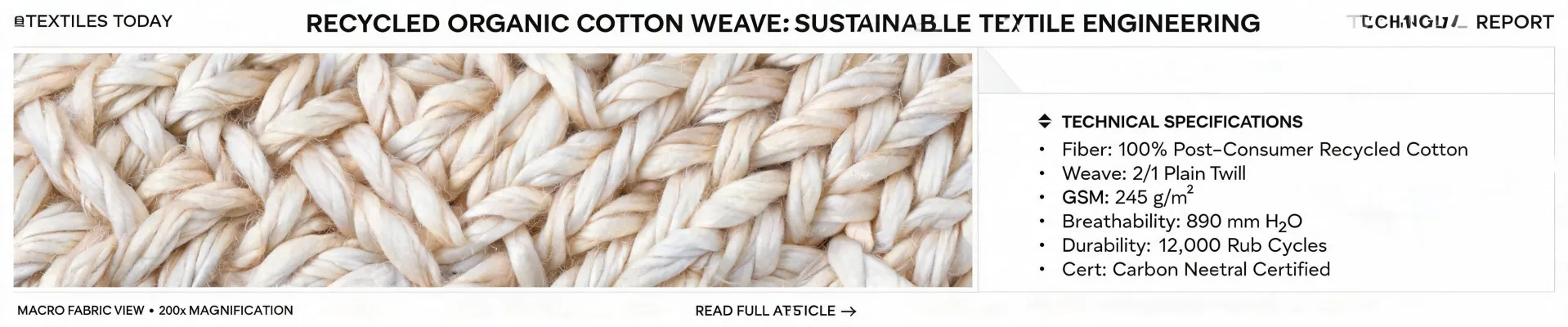
If you're managing procurement for a furniture line, a bedding brand, or a hospitality project, you've probably heard the Raymond name. But here's the thing—ordering from a well-known supplier doesn't automatically mean you'll get what you expect.
I'm an office administrator for a mid-sized company that sources upholstery and bedding fabrics. When I took over purchasing in 2021, I made the mistake of assuming 'Raymond cotton' was a single, standardized product. It's not. After 5 years of managing these relationships, I've put together a simple checklist that saves us from costly errors.
Here are 5 steps I use every time I'm evaluating Raymond fabrics for a bulk order.
Step 1: Match the Fabric to the End-Use
Raymond makes a wide variety of fabrics—cotton, linen, viscose, nylon, polyester, modal, and performance blends. But not every fabric works for every application.
I once ordered what I thought was a standard cotton blend for a hospitality contract. Turned out it was a lightweight apparel fabric, not suitable for heavy-use upholstery. The client complained within three months about pilling.
So before anything else, ask yourself: What is this fabric actually going to be used for?
- Performance couch fabric? Look for waterproof, antimicrobial, or UV-resistant options.
- Green linen bedding? Verify the weave and thread count for comfort and durability.
- Outdoor furniture? Check for UV and mildew resistance.
Checkpoint: Get the manufacturer's recommended end-use in writing. If they say "suitable for upholstery," ask for the specific test data.
Step 2: Get a Physical Sample—Don't Skip This
This sounds obvious, but you'd be surprised how many buyers skip it. I'm guilty of this myself. A good digital photo or swatch card doesn't show you the hand feel, drape, or actual color accuracy.
When I evaluated a Raymond rayon blend for a bedding line last year, the sample looked perfect on screen. In person, the fabric was thinner than expected and had a different texture. If I'd ordered 500 yards based on the image alone, I would've had a problem.
What to check on a physical sample:
- Color under natural and artificial light
- Texture and hand feel
- Drape and stiffness
- Stretch and recovery
- Any defects or inconsistencies
Pro tip: Ask for a sample that's at least 12" x 12". A small swatch can hide repeat defects or pattern issues.
Step 3: Verify the Technical Specifications
Raymond provides detailed spec sheets for most of their commercial fabrics. But again, don't assume they're all correct or up to date.
I remember a situation where a vendor's sheet claimed a fabric was "waterproof." When we tested a sample, it beaded water initially but soaked through after 10 minutes of exposure. The spec sheet hadn't been updated in two years.
Always verify:
- Weight (gsm or oz/yd²)
- Width
- Finish (e.g., stain-resistant, fire-retardant)
- Abrasion resistance (Martindale or Wyzenbeek cycles)
- Colorfastness to light and washing
If you're ordering for a project that requires specific certifications (like GREENGUARD or OEKO-TEX), ask for the certificate directly. Don't rely on a mention in the product description.
Step 4: Test a Small Batch Before Full Production
This is the step most buyers skip, and it's the one that costs the most when things go wrong.
Here's what I do now: order a small batch—maybe 20-50 yards—and run it through our standard production process. Cut it, sew it, wash it, use it. See how it behaves under real conditions.
I learned this the hard way. We once ordered 300 yards of a Raymond polyester blend for a hotel reupholstery job. The sample passed all our initial checks. But when we actually tried to sew it, the fabric shifted under the needle and created puckered seams. The production team spent an extra 20 hours reworking pieces. Net loss: about $1,500 in labor and material waste.
What a small batch test can reveal:
- Sewability and seam performance
- Shrinkage after washing
- Color bleed or transfer
- Pilling after use
- Cleaning and stain removal behavior
Checkpoint: If you don't have the capacity to test in-house, ask the supplier if they can provide a pre-production sample from the same dye lot you'll be ordering from.
Step 5: Confirm Supplier Reliability and Lead Times
Quality isn't just about the fabric itself—it's about the consistency of supply. A great fabric that arrives late or varies between batches isn't really a great fabric for your business.
I manage relationships with about 8 vendors for different needs. For Raymond products specifically, I've found that lead times and stock availability can vary significantly depending on the specific mill or distribution channel.
Before placing a bulk order, confirm:
- Current stock availability
- Lead time for production and shipping
- Minimum order quantities
- Return or exchange policy for defects
- Invoicing and payment terms
A supplier who can't provide clear, written answers to these questions is a red flag.
One more thing: In my experience, Raymond's B2B pricing is competitive but not always the lowest. The value comes from the consistency and breadth of their product line. If you need a single source for multiple fabric types—upholstery, bedding, outdoor—Raymond can simplify your supply chain. But that only matters if the supplier you're working with can actually deliver on the promises.
Common Mistakes to Avoid
Mistake 1: Relying on brand name alone. Just because it says Raymond on the label doesn't mean it's the right fabric for your project. Always verify the specific product specs.
Mistake 2: Skipping the wash test. Cotton fabrics can shrink. Performance fabrics can lose their finish. A simple wash test can save you from a batch of unusable material.
Mistake 3: Assuming all "cotton" is the same. Raymond produces cotton in various weights, weaves, and finishes. A cotton for shirting is different from a cotton for upholstery.
Mistake 4: Not verifying the supplier's credentials. Some distributors sell Raymond-mill ends or seconds. Make sure you're getting first-quality goods from an authorized channel.
Bottom Line
The Raymond brand carries weight for a reason—consistent quality and a broad product range. But as a buyer, your job is to verify, not assume. A little due diligence upfront can save you from the kind of costly mistakes that make you look bad to your stakeholders.
At the end of the day, the fabric you choose is a reflection of your brand. Getting it right means happier clients, fewer returns, and smoother operations.