Four years ago, I took a job as a quality compliance manager at Raymond, a textile supplier serving furniture manufacturers, bedding brands, and apparel producers. You'll rarely find me on the sales side of the business. I'm the one who gets called when a batch fails spec, or when a client's finished sofa starts showing an issue that traces back to the fabric yard. In 2024 alone, I signed off on 1,200+ fabric samples and rejected about 12% of first submissions for spec failures.
The question I hear from nearly every B2B buyer is deceptively simple: should I spec cotton or performance fabric? Plenty of content on this topic is either drowning in jargon or thinly veiled sales pages for one side. So here's the comparison I actually use when evaluating materials on my inspection table—across four dimensions that matter for production, not just for marketing: functional performance, wash durability, cost transparency, and supply certainty.
Functional Performance: The Waterproofing Test
If you're searching for the most waterproof fabric on the market, you'll land on performance fabrics—coated polyester, nylon, or acrylic with a waterproof membrane or lamination. I can tell you from our lab tests: these fabrics dominate in water resistance. No contest.
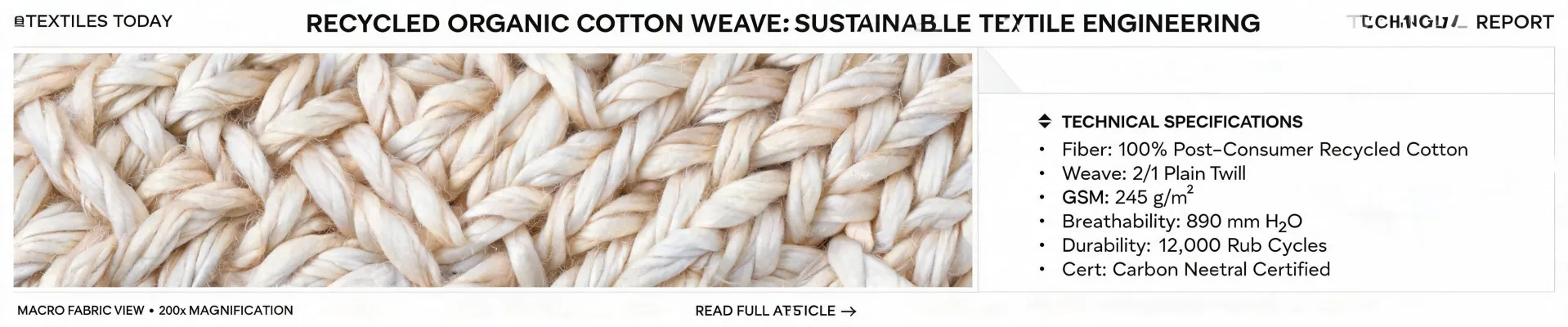
But—and this is where buyers get fooled—"waterproof" is a single label hiding multiple metrics. In our lab, we evaluate three things: hydrostatic head (how much water pressure the fabric resists), spray rating (how quickly water beads off the surface), and moisture vapor transmission rate (how much sweat vapor passes through). A coated nylon can hit a 10,000mm hydrostatic head, while a natural cotton twill sits around 100mm. That looks decisive—until you measure breathability, where the cotton is the clear winner.
For indoor furniture where people sit for hours, breathability often matters more than waterproofing. No one wants a sofa that feels like a plastic bag in summer. Performance fabrics that are genuinely waterproof do what they claim; the coating just isn't invincible. In the same round of testing, we flexed and abraded samples to simulate years of use—the coated samples started showing surface wear much earlier than the cotton did in the same mechanical tests.
So dimension one's verdict: performance fabrics win on waterproofing; cotton wins on breathability and abrasion resistance. The right pick depends entirely on where the product ends up.
Wash Durability: The Bedding Reality Check
Here's a question I ask every supplier before approving bedding fabric: how often should bedding be washed, and what does the fabric look like after 100 wash cycles?
The honest answer to the first half is weekly, at minimum. That standard comes from the health and textile guidance I've reviewed for our hotel and healthcare clients. It means a duvet cover or fitted sheet faces roughly 50+ wash cycles a year. If your fabric's finish can't survive that, it becomes a complaint under your warranty.
In 2023, I ran a washing durability study with a hotel linen buyer on two batches of bedding fabric: one pure cotton from our Raymond cotton line, and one "performance" polyester blend with an antimicrobial coating. After 70 cycles, three of the five performance samples showed visible coating degradation—cracking and pilling along the edges. The cotton samples faded slightly but maintained structural integrity across all 100 cycles. If I remember correctly, the fading wasn't even noticeable from arm's length.
I still kick myself for not running that test sooner. In 2022, we'd specified a coated performance fabric for a client's premium bedding line because it tested well for antimicrobial properties. Within nine months, the hotel started reporting flaking on the sheet surfaces. That quality issue turned into an $18,000 redo and a strained relationship that took another year to repair.
The lesson isn't that performance fabrics are bad. It's that any coating has a lifespan under repeated washing, and for bedding, cotton is the more predictable choice. This is the dimension where the "natural vs. technical" narrative flips—and it surprises a lot of buyers.
Cost Transparency: What "Cheap" Fabric Really Costs
Let's talk pricing, because that's where the real conversation happens.
In Q4 2024, I priced fiberglass mesh fabric from four different suppliers—same weight, same aperture, same alkali-resistant finish. Quotes ranged from $1.28/m² to $2.40/m². An 87% spread between lowest and highest, for literally the same specification. If you've been searching mesh fabric glass price data online, you've probably seen a similar pattern: mills are priced differently because of varying raw material sourcing and quality control costs baked into their numbers.
What's worse is what happens when the cheap option fails. We ordered from the lowest-cost supplier once at a client's insistence. Fourteen percent of the first batch failed the alkali resistance test. The client rejected it, and the production schedule slipped by two weeks. The money "saved" on the unit price vanished into rework and expedited shipping.
I'm not going to sit here and tell you Raymond cotton is the cheapest option. It's not. What we do well is consistency: you order the same spec today and next quarter, you get fabric with the same documented properties. That matters when you're buying 50,000 meters, and your production line can't tolerate variance.
To be fair, some budget mills genuinely produce decent fabric—I've seen a few. But compliance drift is common: the second or third batch quietly edges down in quality when the mill switches raw material suppliers. That inconsistency rarely shows up on the invoice. It lands on your production floor.
Supply Reliability: The Value of Certainty
Something I've seen more and more in 2025: buyers who saved a few points on unit price ended up with unpredictable delivery, and missed deadlines cost them far more than the savings.
When the deadline is fixed, the certainty of delivery is worth paying for.
In March 2024, I authorized a $400 rush fee for guaranteed delivery of 5,000 meters of performance fabric for a contract furniture client. The alternative—a cheaper supplier with a "probably fine" schedule—would have risked a $15,000 event installation. The rush fee looked like a luxury until I measured the downside.
I've lived the opposite scenario too. In late 2022, I accepted a verbal commitment from a vendor for a rush order without paying for their guaranteed slot. The fabric arrived six days late, and we had to air-freight the finished goods at three times the original freight cost. I think about that failure every time I see a buyer hesitate over a small expedite fee. An uncertain "cheap" delivery is rarely cheaper in the end.
This applies to fabric selection as well. Custom fabrics with six-week lead times are a bigger risk than proven stock fabrics—our Raymond cotton, or the standard performance series—when you're under production pressure. If you need fabric in four weeks, a stocked option with a guaranteed ship date is worth more than a custom one with an estimate.
What To Choose, Based on Where Your Fabric Ends Up
There's no single winner here, and I'm not going to fake one. But the scenarios have clear answers:
- Bedding and indoor upholstery: choose cotton. Wash durability, breathability, and predictable behavior over time beat the lack of waterproofing.
- Outdoor furniture, marine, high-moisture spaces: choose performance fabric with credible waterproof ratings. Just budget for coating degradation and set customer maintenance expectations from day one.
- Large-volume contract orders: prioritize supply certainty over unit price. The most expensive fabric is the one that arrives late and stops your production line.
- Rush orders: pay for guaranteed delivery if the cost of delay is material. It's insurance, not an add-on.
One caveat: my experience is grounded in mid-to-large volume B2B orders for furniture, bedding, and apparel fabrics. If you're sourcing for a niche segment—industrial filtration, luxury micro-batches, custom-milled runs—your requirements may differ enough to shift these conclusions. And as of January 2025, raw material prices and shipping rates remain volatile, so verify current quotes and lead times before locking in a budget.
At the end of the day, the best fabric isn't the one with the most impressive spec sheet. It's the one you can consistently rely on—batch after batch, deadline after deadline. That's what quality inspection actually comes down to in this industry.