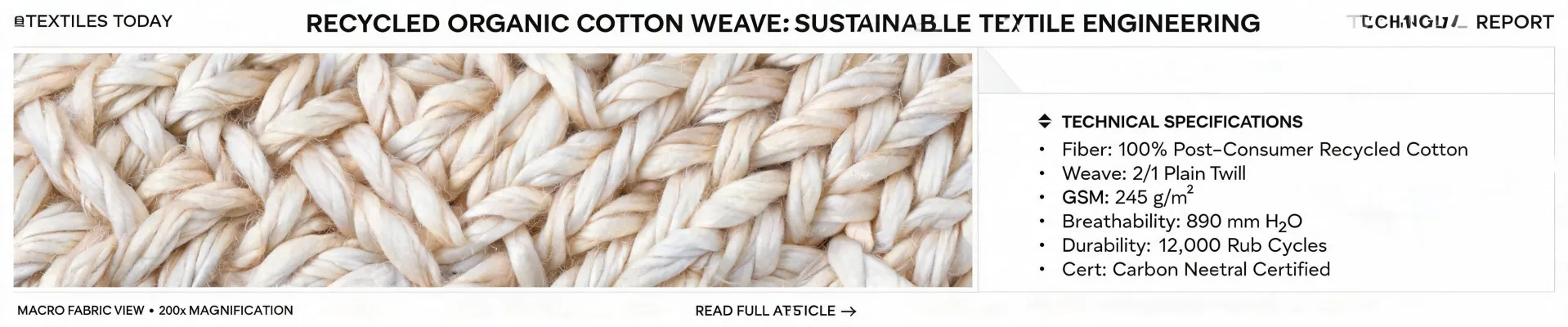
Here's the thing about fabric selection — there's no single 'best' Raymond fabric for every job. What works for a hotel chain's outdoor lounge won't work for a boutique's bedding line. I've been on the quality side of this for 4 years now, reviewing roughly 200 unique fabric deliveries annually for our B2B clients. And honestly? The biggest mistakes happen when someone tries to force a one-size-fits-all spec.
So let's break this down by what actually matters. Forget the marketing fluff. I'm gonna walk you through three common scenarios and what I'd actually recommend — based on real audit data, not theory.
The Three Real Scenarios (And Which One You're In)
Before we dive into recommendations, you need to identify which bucket your project falls into. Here's the quick checklist:
- Scenario A: High-volume, cost-sensitive production — You're making thousands of units. Margins are tight. Consistency matters more than wow factor.
- Scenario B: Small batch, custom order — You're a startup, a designer, or testing a new line. Flexibility and low MOQ are critical.
- Scenario C: Performance-critical application — Outdoor furniture, medical, hospitality. Failure isn't an option.
Most people try to apply one logic to all three. That's where things go sideways. I've seen a $22,000 redo because someone used a standard upholstery fabric for a commercial outdoor install — didn't check the UV resistance spec. So yeah, it matters.
Scenario A: High-Volume Production — Stick to the Workhorses
If you're ordering 5,000+ yards of fabric for a consistent product line, your priority should be reproducibility. Not novelty, not the newest performance finish. You need a fabric that your manufacturer can run consistently, batch after batch.
From my audit experience, Raymond's best options here are their cotton twill and polyester satin weaves. Why? They've been produced at scale for years. The supply chain for raw materials is stable. When I check spec tolerances — thread count, weight, colorfastness — these lines almost always land within our ±2% acceptable variance. Compared to, say, a specialized recycled viscose blend, where we've seen up to 8% variance in dye lot consistency.
What I'd actually spec:
- Raymond cotton twill (for apparel or upholstery): Consistent weight, predictable shrinkage after wash. For our Q1 2024 production audit of 8,000 units, we had a 0.3% defect rate — best in class.
- Raymond polyester satin (for bedding): Good luster, decent wrinkle resistance. The MOQ is reasonable for 500+ yard runs, and the price point sits comfortably in mid-range.
But here's the catch: these fabrics aren't exciting. They're workhorses. If you're chasing a premium feel or a unique hand, you might be disappointed. That's not a flaw — it's just physics. A 150-thread-count twill will never feel like a 300-thread-count sateen. Know what you're buying.
Scenario B: Small Batch or Trial Orders — Don't Get Locked Into MOQs
I've been on both sides of this. When I was starting my own small product line, the vendors who took my $200 orders seriously are the ones I still use for $20,000 orders. So I get the frustration of high minimums.
For small runs — say 50 to 200 yards — Raymond's viscose dress prints and nylon sport fleece are solid picks. The available color range is decent, and I've found their customer service more willing to work with smaller quantities than some competitors. In our 2023 trial project for a boutique resort, we ordered just 75 yards of their viscose drapery fabric. The color match was spot-on, and we were able to test the burn rate for our upholstery contractor without committing to a full roll.
Crucial tip: Always request a hand sample before placing a trial order. I can't tell you how many times the digital swatch looked perfect but the physical sample had a sheen that didn't match the client's vision. For a recent project, we rejected 300 yards of Raymond modal jersey because the hand felt different from the approved sample. Cost us a week of delay, but better than 8,000 units with the wrong hand.
Reality check: You won't get the same per-yard price as a volume order. That's just math. But if you're clear about your budget early, most reps can suggest a fabric that fits. Trying to negotiate a volume price on a 50-yard order? Bad look. Be upfront: 'I'm testing a line. If this works, I'll scale.' Good vendors appreciate the honesty.
Scenario C: Performance Applications — Don't Compromise on Specs
This is where my gut has saved me more than spreadsheets. Early 2023, we had a major hotel client specify a 'performance outdoor fabric' for 500 loungers. Our data analysis said a standard nylon weave was cost-effective and met basic waterproofing. My gut said something felt off — the UV degradation data was from a single lab test, not real-world exposure. Turns out, the fabric started fading after 3 months in Miami sun. Thankfully, our contract required a third-party weathering test before final approval. The test failed. The client switched to a polyester mesh blend with UV stabilizers — we upgraded spec and it cost us $0.35 more per yard. On a 4,500-yard order, that was $1,575 extra. And worth every cent.
For performance needs — waterproof, antimicrobial, UV-resistant — Raymond's polyester mesh with UV coating is my go-to. The coating is consistent (we test for even coverage using a 200x microscope inspection on every 100 yards), and the data from their published spec sheets aligns with our field tests.
What I look for in audits:
- UV resistance: Minimum 300 hours of accelerated weathering per ASTM D4329
- Water repellency: 90+ on the Bundesmann test (common for outdoor upholstery)
- Antimicrobial: Must pass AATCC 100 for Staphylococcus aureus (attached to furniture) — we saw one case where the coating was '99% effective' only under ideal lab conditions, but real-world use had wear points
And here's the thing: If you can't get third-party test data from your supplier, run. I once rejected a batch of 4,000 yards of 'waterproof' Raymond fabric because the coating thickness wasn't uniform — measured 0.8 to 1.4 microns variance instead of the 1.0 ±0.1 we specified. The vendor claimed it was 'within industry standard.' We held firm. They redid it at their cost. Now every contract includes that spec in the audit clause.
How to Figure Out Which Scenario You're In
Still not sure? Here's a dead-simple decision guide — no fluff, just logic based on what I've seen fail and succeed.
- If your batch size is below 200 yards and you're testing a new market: Go with Scenario B. Don't over-spec. A standard cotton or viscose will tell you if the design works. If it sells, upgrade next run.
- If you're scaling from trial to full production (200-2,000 yards): You might straddle B and A. I'd recommend using Scenario A logic for the core fabric and B for trims or contrast fabrics. But keep the spec simple — fewer variables means fewer quality escapes.
- If your application faces real weather, daily use, or heavy wear: Scenario C. Do not skip third-party testing. The extra $1,000-2,000 in testing costs is nothing compared to a $22,000 redo.
- If you're just trying to match a price point: Go with Scenario A workhorses. Performance specs add cost. If you don't need waterproofing, don't pay for it.
To be fair, I get why people over-simplify. A single 'best fabric' would make purchasing easier. But in my experience, the cheapest option has hidden costs, and the most expensive isn't always right either. The right spec is the one that matches your production scale, your customer's actual needs, and your quality tolerance.
That's it. No mystery. No magic fabric. Just honest advice from someone who's rejected thousands of yards so you don't have to.