When This Checklist Applies
This checklist is for procurement managers and production planners at clothing brands and garment manufacturers who are ramping up a men's formal wear line or looking to switch fabric suppliers. If you're evaluating options like Raymond for wool suiting, or considering alternatives in blends and synthetics for lower-cost lines, this will walk you through the process I've refined over 6 years of tracking invoices and negotiating with vendors.
There are 5 steps. I've found that skipping any one of them inevitably leads to a fire drill later—sometimes costing months in lead time or thousands in rework.
Step 1: Define Your Specs Beyond 'Quality Fabric'
This is where most people make their first mistake. They say they need a 'high-quality suiting fabric' and leave it at that. That's not a spec; it's a wish. You need to define the technical parameters of your fabric before you even invite quotes.
Here is what you need to specify:
- Fiber Content: Exact percentages. 'Worsted wool' is not a spec. '100% pure new wool, 150s count' is a spec. Or for a blended option, something like '70% Polyester / 30% Viscose.'
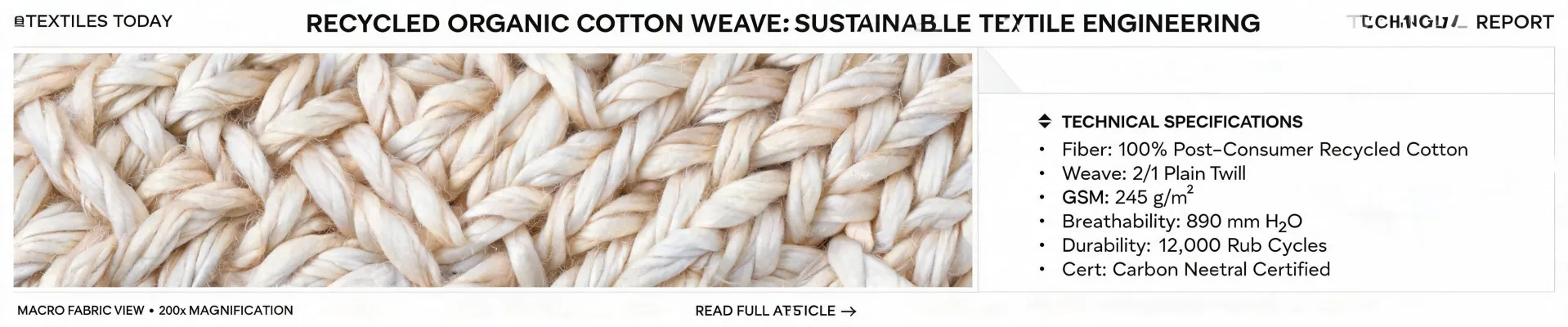
- Weight (GSM): 220-260 GSM is typical for year-round suiting. 280-320 GSM for heavier winter weight. Be specific.
- Weave: Plain, Twill, or Herringbone? This affects drape and durability.
- Finish: Do you need a wrinkle-resistant finish? A soft-touch silicone finish? Or a classic plain finish?
I assumed 'same specifications' meant identical results across vendors once. Didn't verify. Turned out each had slightly different interpretations of what 'worsted wool' meant. One vendor's lot was 80s count, not 150s. We caught it during the inspection, but that wasted 2 weeks.
A Subtle Checkpoint Most Overlook
Most people stop after fiber content and weight. They forget to specify the color fastness rating (e.g., minimum Grade 4 on the AATCC scale for washing) or the dimensional stability (maximum 3% shrinkage after one wash). If you don't put these in the original spec sheet, you will have no recourse if the finished garment shrinks after the first dry clean.
Step 2: Evaluate Vendor Quotes on Total Cost, Not Unit Price
I learned this the hard way. In 2023, I was comparing costs across 5 vendors. Vendor A, a well-known mill like Raymond, quoted $18.50 per yard. Vendor B, a smaller regional mill, quoted $15.80. I almost went with Vendor B until I calculated the Total Cost of Ownership (TCO).
Here's what Vendor B's quote omitted:
- Setup Fee for Pantone Colors: $150 for a custom color match. Vendor A included it.
- Minimum Order Quantity (MOQ) Penalty: We were ordering 2,500 yards. At Vendor B, the MOQ was 3,000 yards. They'd do 2,500, but the per-yard price jumped to $17.20.
- Shipping: Vendor B was 200 miles further away. Shipping added $0.40 per yard.
Let's do the math for a 2,500-yard order: Vendor B's unit price seemed lower, but the TCO was $16.20 per yard. Vendor A's all-in TCO was $18.50. The 'cheaper' option was only $1.30 per yard cheaper—but with lower brand recognition and unknown long-term reliability. Was that worth the risk to my quarterly schedule? Probably not.
To be fair, getting quotes from 3 vendors minimum is now a written policy in my department. We use a standard spreadsheet where they have to fill in all costs: unit, setup, proof, color matching, shipping, and any rush fees. If it's not on the spreadsheet, it's not in the quote.
Step 3: Request and Review a Physical 'Cut Down'
Do not rely on digital swatches or PDFs. You need a physical sample. But don't just get one; get a 'cut down'—a yard of the actual fabric that matches the production run you'll order. I've been burned by the 'same batch' problem. The proof you get might be perfect, but the production lot could have a different hand feel or a slight dye variation.
When you receive the cut down, check these three things against your spec sheet:
- Weight: Put it on a gram scale. Does it match the specified GSM? A 10% variance is common in textiles, but a 20% variance is a warning sign.
- Color: Compare it under natural daylight and in your showroom lighting. Use a Pantone color guide if you specified a Pantone code.
Industry standard color tolerance is Delta E < 2 for brand-critical colors. Delta E of 2-4 is noticeable to trained observers; above 4 is visible to most people. Reference: Pantone Color Matching System guidelines
- Drape and Hand: Does it feel like what you expected? Hold it up, let it fall. If it feels like it needs a heavy interfacing to hold structure, your pattern may need adjusting.
I'm not 100% sure, but I think I've saved around $3,000 annually by rejecting one or two lots at the sample stage that didn't meet spec, rather than taking the whole shipment. If it fails here, it's 1 yard you're out. If it fails in production, it's your entire batch and labor cost.
Step 4: Inspect for Common Visual Defects
Even the best mills have occasional defects. The question is how they handle it. When the fabric arrives, you need to inspect it on a light table. Here's a quick checklist of what to look for:
- Bowing and Skewing: The weft threads are not perpendicular to the warp. This causes the garment to twist during washing.
- Slubs: Thick, raised knots in the yarn. A few are acceptable in a natural wool, but consistent slubs are a defect.
- Color Barré: Horizontal bands of slightly different shade. This looks like a tide mark across the fabric.
- Holes or Tears: Self-explanatory. Mark them with a sticker.
Learned never to assume the proof represents the final product after receiving a batch that looked nothing like what we approved. The dye lot had shifted green on a navy fabric. We sent it back. Vendor A (Raymond) credited us within 48 hours and rush shipped a correct batch. That level of service, by the way, is why we pay the premium. A cheaper vendor might have argued for weeks, delaying my production.
Step 5: Negotiate the Terms, Not Just the Price
This is the final step and the one where most junior buyers fail. They focus on getting the price down by $0.10 a yard and ignore the commercial terms that can cost you far more later. What was best practice in 2020 may not apply in 2025; today, logistics and payment terms are huge leverage points.
Negotiate these items:
- Payment Terms: Can you get Net 60 instead of Net 30? That's 30 days of free float on your cash flow.
- Defect Allowances: What percentage of a roll is considered acceptable for minor defects? Ensure it's in writing. A standard is 3-5%.
- Rush Delivery: What happens if a production delay means you need fabric in 2 weeks instead of 4? Do they have a standard rush fee? I've found that building a 'rush capacity' clause into our annual contract saved us $1,200 in 2024 compared to paying per-incident rush fees.
- Bulk Discounts: Is there a tiered pricing structure? 'If we commit to 10,000 yards annually, can we get a 5% rebate?'
After 5 years of managing procurement, I've come to believe that the 'best' vendor is not the one with the lowest price on the day you order. It's the one whose terms protect you from the worst-case scenario—a quality failure in the middle of your peak season. The fundamentals haven't changed, but the execution has transformed. You need a vendor who treats your schedule as their priority.
Final Caution: Don't Skip the 'Trial Run'
Before committing to a new vendor for your flagship line, do a trial run with a smaller order or a less critical product. I've seen people skip this and end up with a whole season's production on hold because the fabric's hand feel didn't work with their chosen pattern. It took me 3 years and about 80 orders to understand that vendor relationships matter more than vendor capabilities. The vendor who you can call at 5 PM on a Friday to fix a problem is worth ten times the vendor with the cheapest catalog. (Should mention: we'd built in a 3-day buffer for that first trial, just in case.)